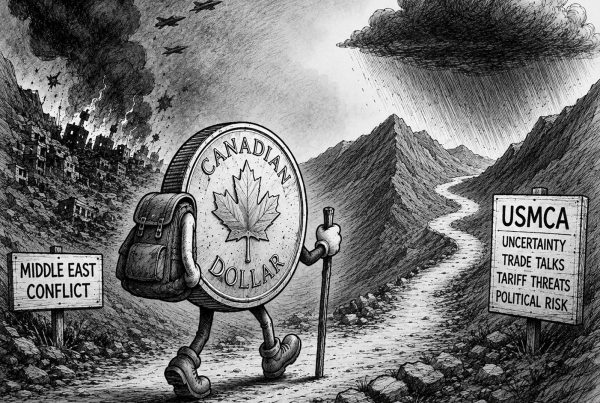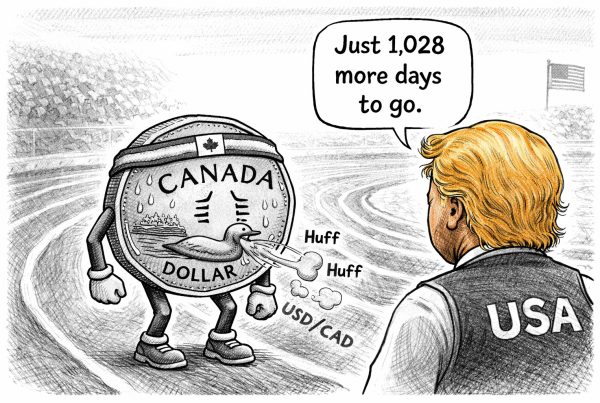
The Canadian dollar, or loonie, has been anything but boring this year. As we roll into fall 2025, traders, businesses, and travelers all want to know: where’s the loonie going next?
The answer isn’t simple. Canada’s economy is showing both resilience and weakness. GDP contracted 1.6% annualized in the second quarter of 2025 as exports plunged and business investment fell, yet household spending and housing stayed firm. This push and pull means the loonie is unable to make any clear breakout moves. Still, it isn’t in free fall and is holding up better than expected.
Canadian Dollar Strength or Broad U.S. Dollar Weakness?
As much as this might hurt our collective Canuck egos, the major reason the Canadian dollar is holding up relatively well is that the U.S. dollar is broadly weaker against most currencies. The U.S. dollar posted its worst first half in 52 years, tumbling more than 10% against its global peers in June alone. Yet, compared with currencies like the euro or pound, the loonie’s moves have been fairly muted. Most currency experts expect the U.S. dollar to continue to weaken.
Interest Rates: Canada vs. the U.S.
One of the factors helping the Canadian dollar find its footing right now is interest rate policy. The Bank of Canada is further along in its cutting cycle and will likely bottom out sooner than the U.S. Federal Reserve, which is expected to cut rates more dramatically. By year-end, Canada’s rates could be around 2.5%, while the Fed sits closer to 3.75%.
While that gap makes the U.S. dollar more attractive to investors in the short term, it also shows Canada’s economy is further along in its recovery phase and more likely to see an economic pickup sooner.
Trade Tensions Cool Off… But Big Talks Ahead
While Canada was one of the first countries to be impacted by U.S. tariffs, the reality is that most Canadian exports are covered by USMCA (NAFTA’s replacement), and the average effective U.S. tariff rate on imports from Canada remained one of the lowest among U.S. trading partners at 2.4%, according to an RBC report. This has helped the Canadian dollar weather the storm.
Recently, Canada announced it is rolling back its 25% retaliatory tariffs on U.S. goods this fall. That means cheaper imports on everything from orange juice to motorcycles, which should ease some inflation pressures at home and give the Bank of Canada more breathing room. It’s also a strategic retreat by the Canadian government, especially given the upcoming USMCA review.
The trade pact between Canada, the U.S., and Mexico is up for review, and it’s expected to get heated. Any smooth progress could add confidence to the Canadian dollar. But if talks stall—especially on sensitive sectors like autos or agriculture—the loonie could find itself under fresh pressure.
For now, markets are pricing in cautious optimism: tariffs are easing, and all three countries have an interest in avoiding major disruptions. Still, traders will be glued to every headline as negotiations unfold.
Where the Dollar Stands Now
The loonie has been trading in the 1.37–1.38 range against the U.S. dollar lately. What this tells us is that the loonie has found a sort of comfort zone—stable enough to avoid panic, but not strong enough to deliver much relief.
Most banks and analysts see the loonie holding steady through fall, maybe even firming up into the low 1.35s if conditions improve. But the risks remain balanced:
- Base case: USD/CAD stays between 1.35 and 1.38.
- Bullish case: If oil rallies and inflation cools, the loonie could dip toward 1.32.
- Bearish case: If the Fed stays aggressive and Canada lags, we could see 1.40+.
In short, the Canadian dollar is neither surging nor collapsing—it’s grinding along in a range that reflects its modest strengths and the challenges of today’s unpredictable global environment.
The Canadian dollar is currently trading at 1.37346 CAD against the US Dollar.