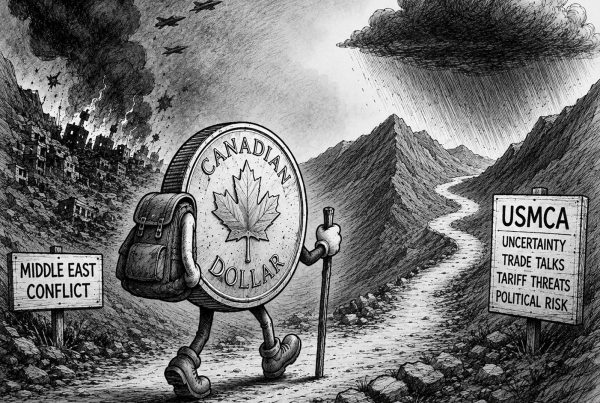
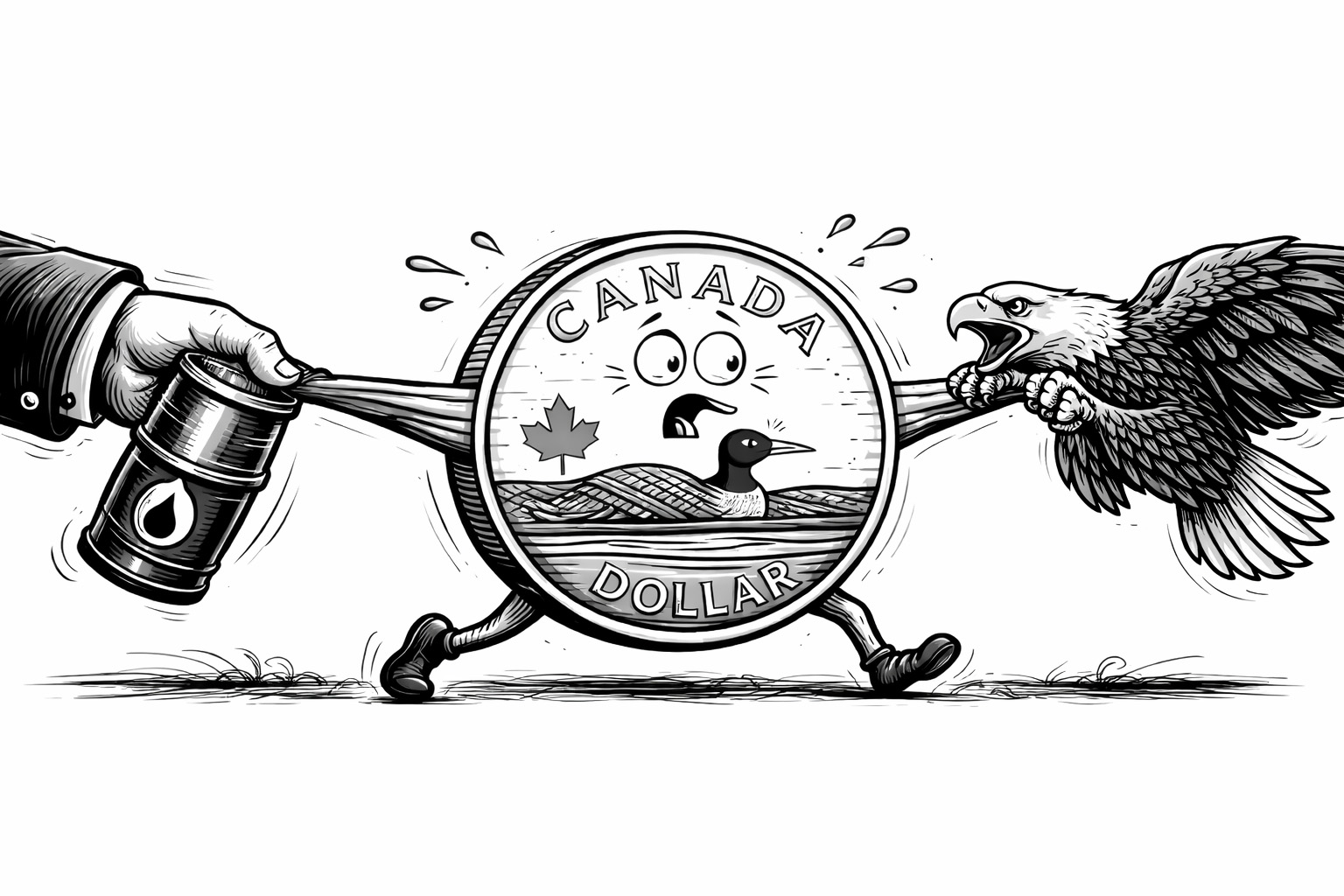
The Canadian dollar (CAD) is once again finding itself pulled in two directions. On one hand, rising oil prices are giving the currency some support. On the other, global uncertainty tied to the rapidly expanding Middle East conflict is driving investors toward the U.S. dollar.
For now, the result is a Canadian dollar that is holding up better than many of its peers but still struggling to gain meaningful ground against the U.S. dollar.
Oil Is Giving the Loonie a Cushion
Canada’s status as a major energy exporter is playing an important role in how the Canadian dollar is reacting to the latest geopolitical shock.
After the recent military strikes involving Israel, the United States, and Iran, oil prices jumped sharply. West Texas Intermediate crude surged more than 15 percent in just a few days, moving from around $67 to roughly $77 per barrel.
That move matters for the Canadian dollar.
Because Canada exports large amounts of oil and energy products, rising crude prices tend to support the country’s currency, especially when the jump in price is related to a shock event such as the current conflict in the Middle East. When oil climbs, global demand for Canadian exports increases, and that can help stabilize the Canadian dollar even when broader financial markets are under stress.
This is one reason the Canadian dollar has held up relatively well compared with other major currencies. While the CAD slipped slightly against the U.S. dollar, other currencies such as the Japanese yen and Swiss franc experienced much larger declines during the same period.
In other words, oil is acting like a buffer for the Canadian dollar.
But Safe-Haven Demand Is Boosting the U.S. Dollar
At the same time, geopolitical uncertainty is creating a powerful counterforce.
Whenever global tensions rise, investors tend to move money into assets considered safe havens. The U.S. dollar is one of the biggest beneficiaries of that shift. As markets react to uncertainty in the Middle East, demand for the greenback has surged.
The U.S. Dollar Index recently posted its strongest two-day rally since 2022, showing just how quickly global capital is flowing into the currency.
That strength is making it difficult for the Canadian dollar to rally against the USD, even with oil prices rising. The result is a tug-of-war between two powerful forces:
- Higher oil prices supporting the Canadian dollar
- Risk-off sentiment from the conflict driving demand for the U.S. dollar
For traders watching the USD/CAD exchange rate, that tension is keeping the pair locked in a relatively tight range.
Inflation and Interest Rates Are Back in Focus
The jump in oil prices is also changing expectations around inflation and central bank policy.
Higher energy prices tend to push inflation higher across the global economy. As a result, financial markets are adjusting expectations for interest rate cuts from the U.S. Federal Reserve. Some traders who previously expected cuts earlier in the year are now pushing those expectations further into the future.
That shift matters for the Canadian dollar because interest rate expectations often drive currency movements. If U.S. interest rates remain higher for longer, the U.S. dollar can maintain an advantage over other currencies, including the CAD.
The Big Question: Growth or Energy?
Looking ahead, the path for the Canadian dollar will likely depend on how the Middle East conflict evolves.
If the situation remains primarily an energy shock, meaning oil prices rise but global growth remains intact, the loonie could actually benefit. Higher oil prices would boost Canada’s export revenues and support the currency.
However, if the conflict expands and begins to weigh on global economic growth, the picture could change quickly. In a broader risk-off environment, investors often move heavily into the U.S. dollar regardless of commodity prices.
In that scenario, the Canadian dollar could struggle even with oil trading at elevated levels.
A Currency Caught Between Two Forces
For now, the Canadian dollar sits somewhere in the middle.
Oil prices are providing support, helping the CAD outperform many other major currencies during this latest wave of geopolitical tension. But the strength of the U.S. dollar is preventing a stronger rally.
Until markets get more clarity on the direction of the Middle East conflict and its impact on oil and global growth, the Canadian dollar outlook will likely remain a balancing act between energy markets and global risk sentiment.